New Report Highlights Nature-Based Solutions for a Healthier Dushanbe
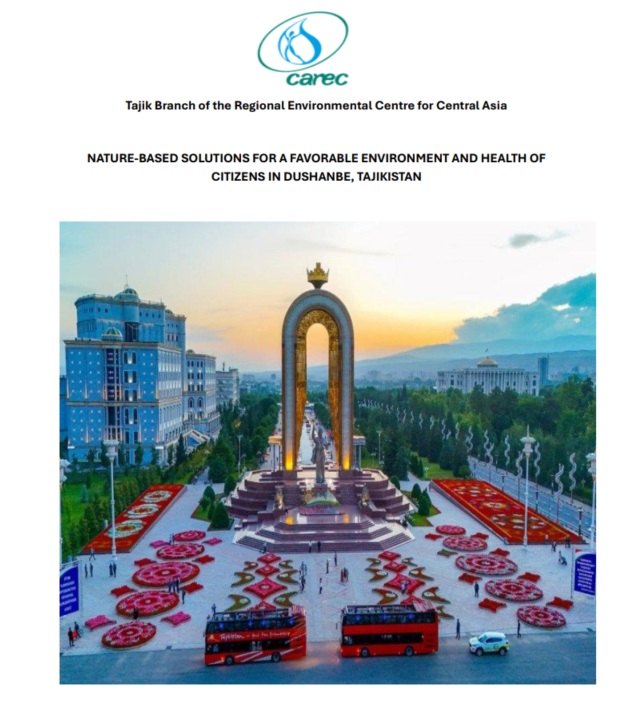
A new report titled “Nature-Based Solutions for a Favorable Environment and Health of Citizens in Dushanbe” has been released by the Tajik branch of the Regional Environmental Centre for Central Asia (CAREC), with support from the United Nations Environment Programme. The publication explores how nature-based solutions (NbS) can address pressing environmental and public health challenges in Dushanbe, Tajikistan’s capital.
Focusing on urban resilience, the report presents practical options for integrating green infrastructure into city planning—such as green corridors, urban forests, and sustainable water and waste management systems. These approaches aim to reduce air pollution, strengthen public health, and enhance urban biodiversity in line with Tajikistan’s national development goals and international commitments.
When it comes to air quality, the report emphasizes the important role of NbS in mitigating emissions from both transport and heating. Trees and green belts can act as natural air filters, absorbing harmful pollutants and cooling urban microclimates. Expanding vegetative cover, promoting green roofs and walls, and creating buffer zones between residential areas and polluting facilities are identified as priority interventions. Additionally, the report calls for integrating NbS into the city’s Master Plan and Green City Action Plan to complement technological and regulatory measures for cleaner air.
This is the first study of its kind in Dushanbe to systematically examine the intersection of NbS, urban health, and environmental policy. It reinforces the growing momentum in Tajikistan for sustainable, people-centered city development based on natural systems.
The report is available at this link.